Two days and four years ago marked the day I was forced to make one of the most difficult decisions I think I will ever make in my entire life: choosing whether another person lives or dies, thereby embarking on an ascending transition. Taking on the responsibility of another person’s life is no easy feat.
When women become pregnant, they, and in some cases their significant other or sperm donors, readily decide whether to terminate the pregnancy or proceed with the birth. After parturition, most women and men assume responsibility for their child or children, holding individual or joint medical power of attorney, at least until the children reach adulthood, and maintaining custody to make life-and-death decisions on their behalf. In a reverse capacity, adult children of unwed parents are granted individual or group capacity to act on their parents’ behalf, unless otherwise stated in a Will, Trust, or Medical Power of Attorney. From an adult perspective, when mature individuals marry, they assume lifelong responsibilities, including serving as each other’s medical power of attorney and medical decision-makers, unless otherwise stated. Marriages are initiated with the phrase “in sickness and in health, and ’til death do us part,” as a marriage cannot be officiated or finalized without agreeing to these formidable terms. I loved and still love my husband, and NO ONE can prove or suggest otherwise. Nor can others, hence outsiders contest this fact.
Retrospectively and introspectively, we stockpile these phrases, “in sickness and in health, and ’til death do us part,” as if death, in an inevitable sense, were jejune, something we can plan for, and that it will only come with aging, hence natural death, opposite to natural birth. More or less, most people live and breathe by the superstition and the prime number, that death comes in threes. My husband’s death was indeed part of an amassed three, or should I say FOUR, as he, two of his previous senior partners, and the most senior person of the organization, all of whom passed in a matter of a single year apart.
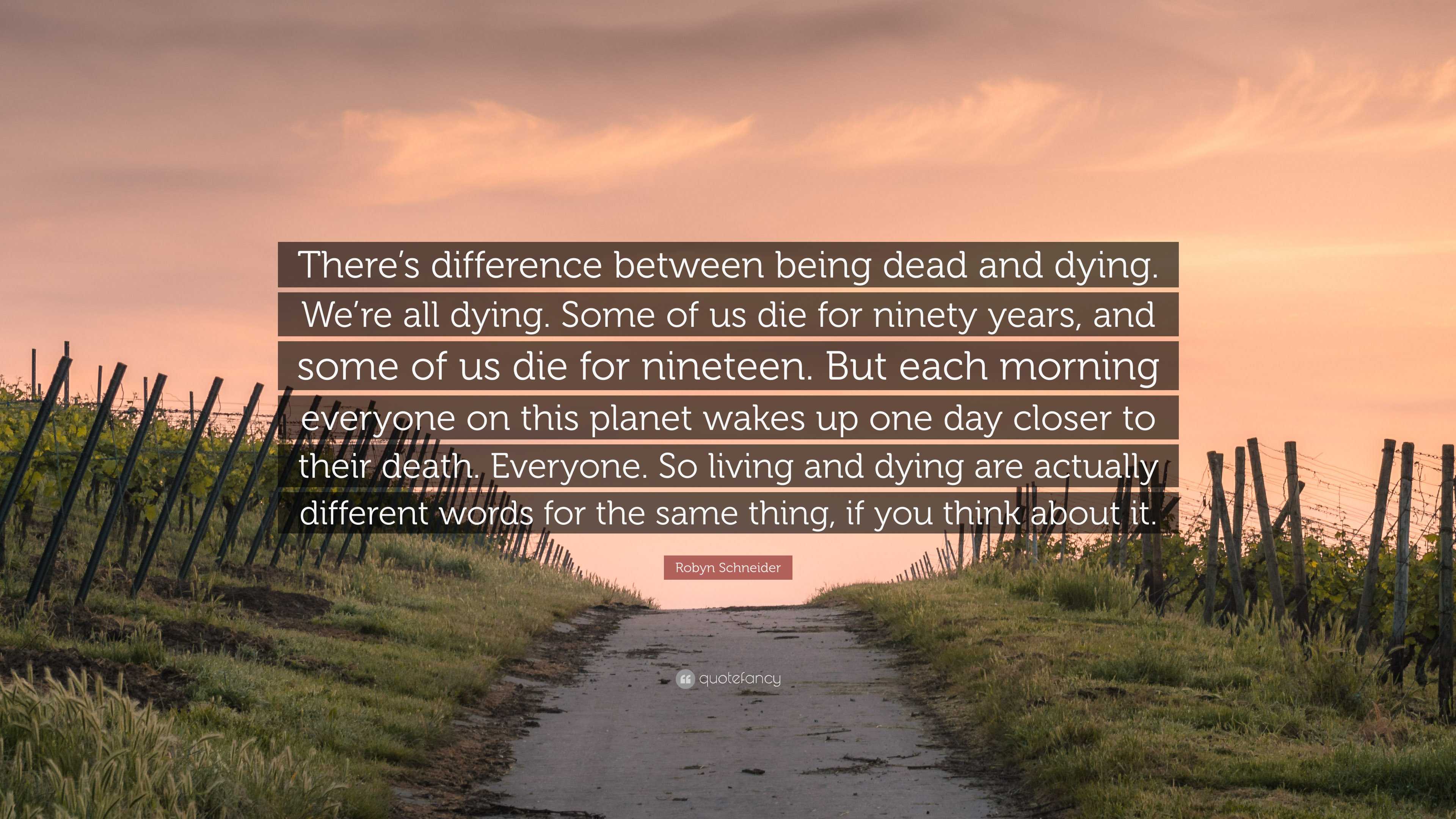
For many of us, we live life in a desensitized and imprudent manner, death as taboo and life as if it were an interminable process filled with probabilities. Thus, we conceivably fail to realize that just as we were permitted the opportunity to live, generally by our parents’ birthing decisions, we are equally permitted to die, with or without personal certitude or permissions. The ability to live is about making the right, unstifled, and wise choices.
Living is about being a responsible and mature adult.
Living is about having fully developed the psychological capacity, buoyancies, and emotional quotient to navigate challenging life circumstances effectively.
Yes, to live means living and dying multifariously and amongst diverse others, even when others’ lives indubitably and chastisingly clash with our own, thus getting in the way of what we readily wish and efficaciously desire to accomplish. Never do we ever think that our lives will come to a screeching halt or to the point that others are forced to unexcitedly decide whether we live or die, or vice versa. Why? It is because life and living are filled with uncertainty and unpredictability. Just like everyone is born with a birthdate, the initial countdown to our death, everyone has an expiration date. Yet, we don’t know the exact actual and factual dead date. While some take it upon themselves to voluntarily terminate their lives through self-inflicted wounds and perpetuities, such a gesture is highly discouraged. Suboptimal and subliminal life events often lead to ineffective, consequential, and guilt-driven choices. Life, in and of itself, can be discouraging and a never-ending struggle. Returning to my personal experiences, I faced unilateral decisions that were both medical emergencies and mandatory. At the same time, the person whose life was in my hands lay voiceless, incapacitated, and defenseless. Even as I had to make these decisions, I listened, leaned into, and followed the advice and instructions of the medical professionals. When they optimistically primed me with the idea that hope, optimism, physical contact, and presence would make a world of difference, I kissed and touched my husband in all the biological spaces medically permissible and, in that instance, humanly possible. I prayed to higher powers. I communicated effectively, speaking his love language–handholding and physical contact. As the only person he had loved and trusted for a decade, and with the certainty and discernment that he wanted me there more than anything or anyone else, I assured him that I was there and wasn’t going anywhere, even if it meant loafing in the lobby while he underwent medical procedures. I was there from the beginning to the end of visiting hours. Most nights, I slept in the car on the premises, adjacent to the emergency entrance. Therefore, if a medical emergency occurred and doctors or nurses needed my immediate attention, I was readily available rather than miles away.
Being called to order in medical emergencies, especially those that are astonishing, is never straightforward. Such calculated and weighty decisions are always painstaking, given the emotional, psychological, and security attachments. By comparison, life-or-death medical decisions may be a matter of forward-thinking for medical professionals, given that they have undergone extensive training and field experience to regulate their emotions, maintain professional composure, and detach personally to sustain clear judgment under pressure. As such, professional composure gets tossed out the window, with the trash, when it’s the medical professional’s loved one, namely, a spouse or significant other, who requires medical attention and advocacy. Nonetheless, I give kudos to all medical professionals, regardless of rank or role. If I have not said thank you before, I am saying it now, not only for taking swift, effortful action to save my husband’s life, but also for all that you do.
I thank all medical professionals and all first responders who ungrudgingly put their own lives, health, and well-being on the line to save others’ lives.
I thank those who experience cognitive decline from exhaustion, stress, and burnout.
Most importantly, I thank you for taking the time to consider the loved ones enduring emotional torment, uncertainty, and severe heartache. As a secondary victim of medical crises, you ask if we’re okay and ensure we have the privacy and space to vent, cry, ask questions, and even be supportive, even when it’s not part of your job description. But I guess it comes with the territory.
For four years and two days, I have been repeatedly asked whether I am okay or how I am coping, and my responses have always been fictitious: yes and fine. These curvilinear and nonlinear answers were the result of wanting to be unbothersome and less onerous to others, whereas, deep down, my life was totally obliterated. Presently, I am still suffering severely, with complete and utter devastation, desolation, and a fragmented heart and soul. Even after years of experiencing loss, I am still in the infancy stages of prolonged grief, particularly as it relates to Kübler-Ross’ notion of death and dying. I have not accepted, nor will I ever assent to, the fact that my husband is no longer here, especially given that I have psychologically reconstructed my life as if he were readily present, seeking his permission and making joint decisions from a husband-wife perspective, all while looking for his mere existence in others. I seek to surround myself with others who can momentarily grant me the opportunity to feel whole, while also extinguishing my individual sense of forlorn and purposeful solitude. All these years, my social engagements have been intentional, yet meager distractions.
Forcibly navigating the loss of someone who was the nucleus of your life is a constant reminder of unwholesomeness and fragmentation. And while this marks four years, as I continue to live and breathe, I recognize that each and every day moving forward will be a monotonous, piercing, guilt-ridden reminder. Moreover, every second, minute, hour, day, week, month, and year will be an adverse juxtaposition and a tertiary level of despondency: our initial encounter, my birthdate, and our wedding anniversary, all of which are now significantly intertwined with such a prominent tragedy.
While the world recognizes death as taboo and an avoidable topic. Let’s talk about it.
Dr. Pearce – a grieving widow.


Leave a Reply